
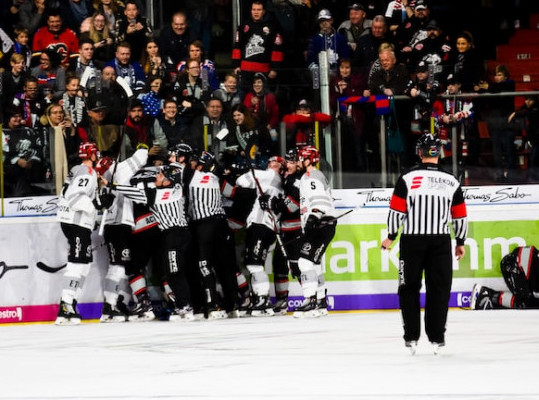
 Penalties: A Part Of The Game
Calling penalties in ice hockey as an official is not an easy task.
You must always be alert, fair and consistent while keeping up with the fast-paced action on the ice. Here are some tips on improving your game management and penalty-calling skills
– Know the rules.
This may seem obvious, but you must thoroughly know the official rules of ice hockey for the type you officiate and how they apply to different situations.
You start with your yearly Clinics and seminars.
You grow your knowledge and confidence by
- Regular reviewing of the rule book and Case book
- Going back to the case book, when you have any confusion or questions about calls you have made, No one can know everything, but anyone can learn.
You should also be familiar with the signals and procedures for calling penalties, such as blowing the whistle, raising your arm, pointing to the offender and announcing the infraction.
– Communicate with your partner.
As a referee, you are not alone on the ice. Your partner is also responsible for calling penalties and enforcing the rules.
It would be best to communicate with your partner before, during and after the game to ensure you are on the same page.
You should also support each other’s calls and avoid contradicting or overruling each other.
During the game is not the time to discuss.
Stick to the Call and discuss it in the referee’s room.
– Position yourself well.
Your position on the ice can affect your ability to see and call penalties.
You should try to stay close to the play but not too tight that you interfere with it.
You should also avoid being behind the play or in the blind spots of your partner.
This is achieved with good skating skills and by keeping your feet moving!
Never get caught flat-footed.
Move around the ice in a way that gives you the best angle and view of the action.
– Be consistent.
One of the most essential qualities of a good referee is consistency.
You want to apply the rules and consistently call penalties throughout the game, regardless of the score, the time, the teams or the players involved.
You want to be consistent with your partner and other officials in your league or association. Consistency helps to maintain the credibility and respect of the officials and the game.
Stay in touch with the organization you are officiating for and know what the rules are that they want to focus on enforcing.
– Be confident.
Another essential quality of a good referee is confidence. You want to be confident in your knowledge of the rules, your position on the ice, your calls and your communication.
You don’t want to hesitate or second-guess yourself when calling penalties because it l leads to confusion and frustration among players, coaches and fans.
You don’t want to be influenced by external factors, such as pressure, intimidation or criticism from others.
Your confidence will grow with experience and continue to build if you follow these steps.
Remember, we will make mistakes occasionally. Even the best in the world have their days.
Owning up to them goes a long way in developing trust and good relationships with coaches, players and other officials. Remember, you have people who have your back.
That is why I created Refcoach.ca as a resource to help Officials of all ages.


